WHY CERTALDO?
What an overlooked Tuscan town is teaching me about slow travel, soft life, friendship, creativity, and the kind of destination that gives something back.
Someone asked me, “Why Certaldo?” My question is, why not Certaldo? I am a world traveler. I have been a lot of places, spent time in a lot of spaces, experienced cities people spend their entire lives dreaming about visiting, and seen enough beautiful destinations to know that beauty alone does not make a place special. Some places photograph beautifully and leave very little with you once you leave. Some are exciting while you are there, but you are on to the next when it is time to go. Then there are those rare places where something feels different almost immediately. Certaldo Alto is one of those places for me.
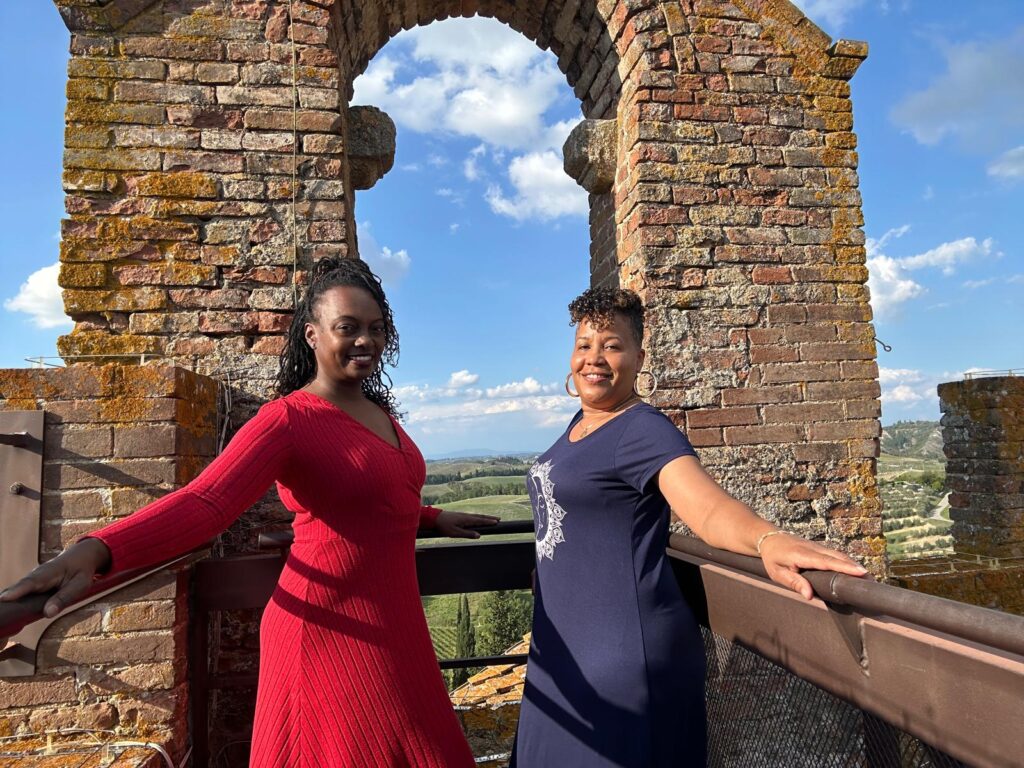
I came here wanting to experience a part of Tuscany that does not dominate the American travel conversation. I wanted to know if two women could arrive by train, make our way into a medieval Tuscan hill town without renting a car, stay inside the historic village, eat locally, meet the people who live and work here, and actually experience Tuscany rather than race through it for the Gram. I expected beautiful views, history, and good food. What I found was a place that made me start questioning why we sometimes travel so far only to recreate the same hurried pace we were supposed to be getting away from.
There is a serenity here that is difficult to explain until you experience it. The air feels clean and crisp. From Certaldo Alto, the Tuscan landscape seems to stretch forever. The old brick buildings, narrow streets, and rolling hills are certainly beautiful, but beauty is only part of what has gotten my attention. No hustle, bustle, rush, or fuss. No fighting through overcrowded tourist attractions, standing shoulder to shoulder with people all trying to get the perfect photo, or racing from one landmark to the next before the day is gone. There is room here to walk, look around, connect with people, sit down, eat, think, and actually be present!
That matters to me at this stage of my life. I have learned that rest and presence are not always about doing absolutely nothing. Sometimes they are about finally having enough space around what you are doing to actually enjoy it. There is a difference between moving slowly because there is nowhere to go and moving slowly because nothing is demanding that you hurry. Certaldo feels like the second one.
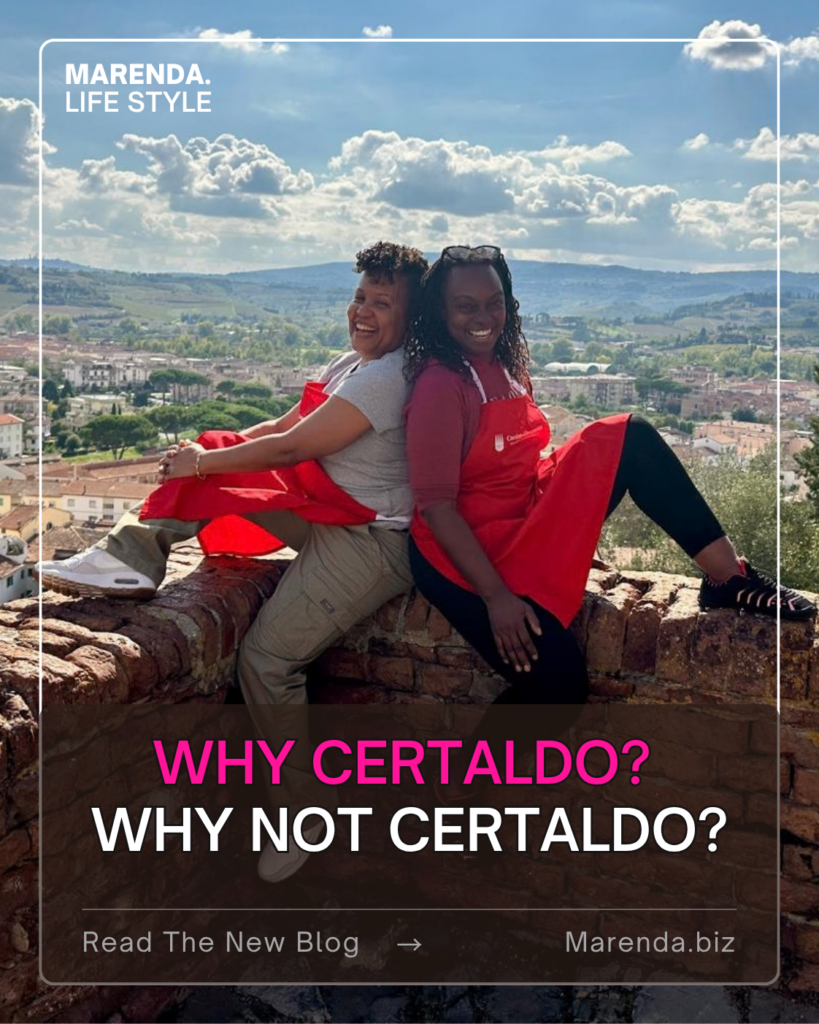
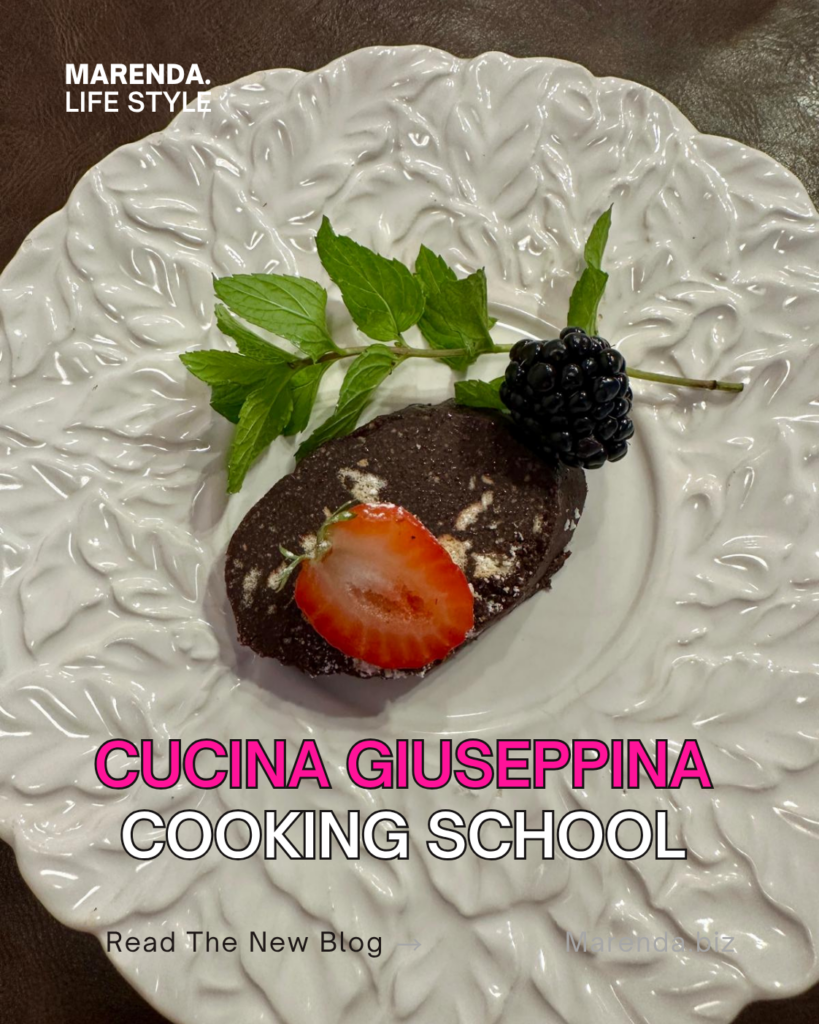
This morning, I took a cooking class with my best friend of more than 40 years. Think about that for a minute. More than four decades of friendship, and somehow we still get to have firsts together. We were at Cucina Giuseppina in Certaldo Alto, learning, cooking, talking, laughing, and eventually sitting down to eat the meal we had helped prepare. I was relaxed. I was present. I was not mentally three steps ahead of myself. I was enjoying my best friend, the people around us, the food we were making, and the fact that this was our life at that exact moment.
That experience helped me understand something about Certaldo. This town does not need to entertain you every minute to give you something valuable. Sometimes the experience is simply having the time and space to participate in your own life. We did not watch someone demonstrate Tuscany to us. We put our hands in the food. We learned from a local family. We sat down and ate what we made. The memory is not only going to be what was on the plate. It will be how we felt while we were there.
Then tonight, we went wine tasting at A Solatìo, another local family-owned business. Again, what could have been reduced to another thing to do in Tuscany became something more personal because there were people attached to the experience. There is land behind what is in the glass. There is a family behind the business. There are stories, work, decisions, and generations connected to what visitors eventually experience as “a wine tasting.” That has become a recurring theme during our time here. Certaldo keeps introducing us to people, not simply pointing us toward attractions.
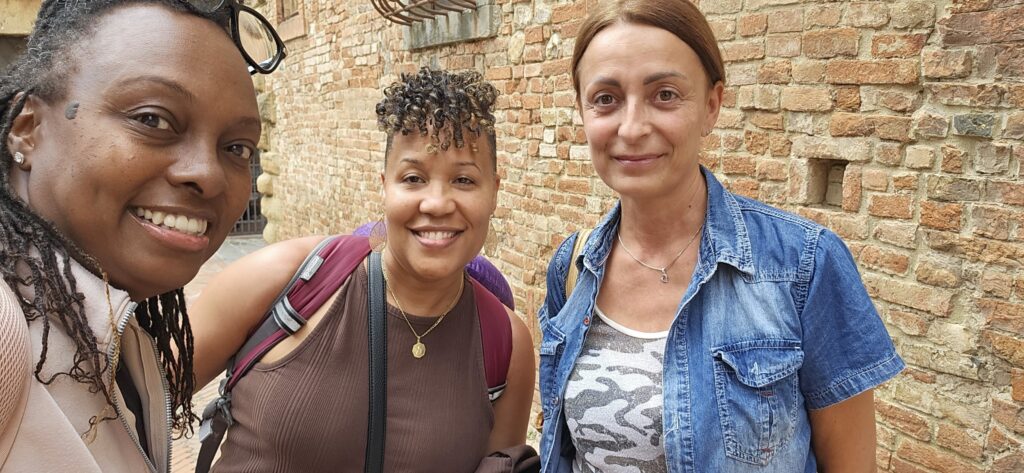
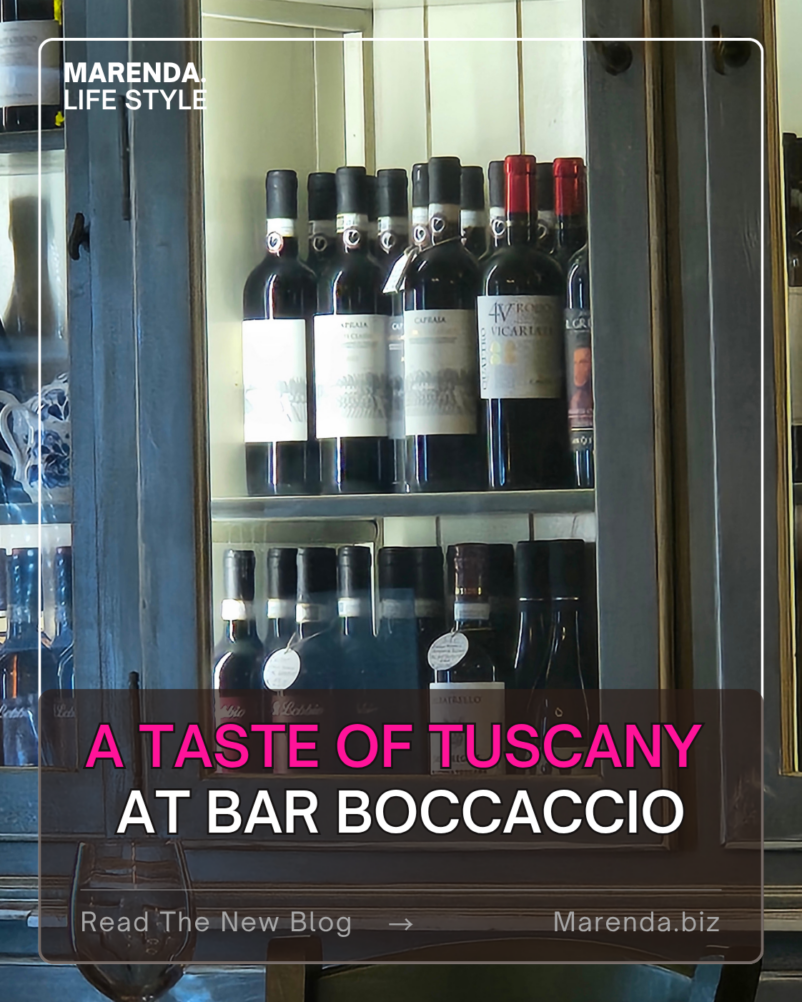
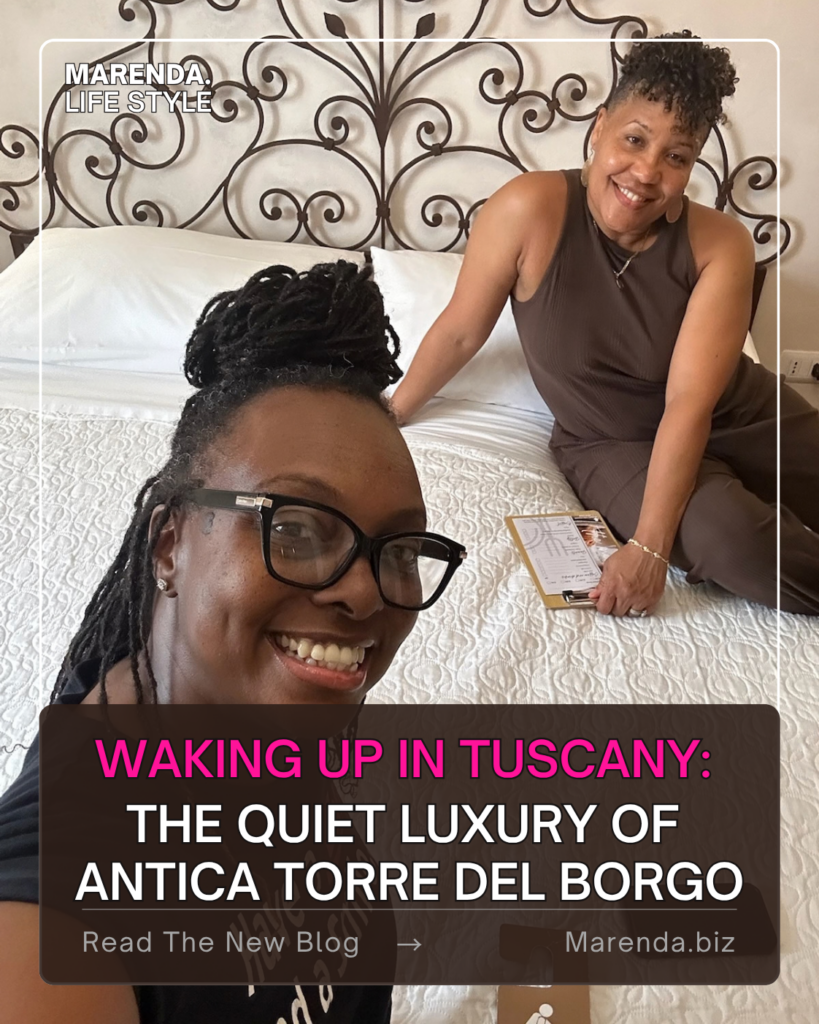
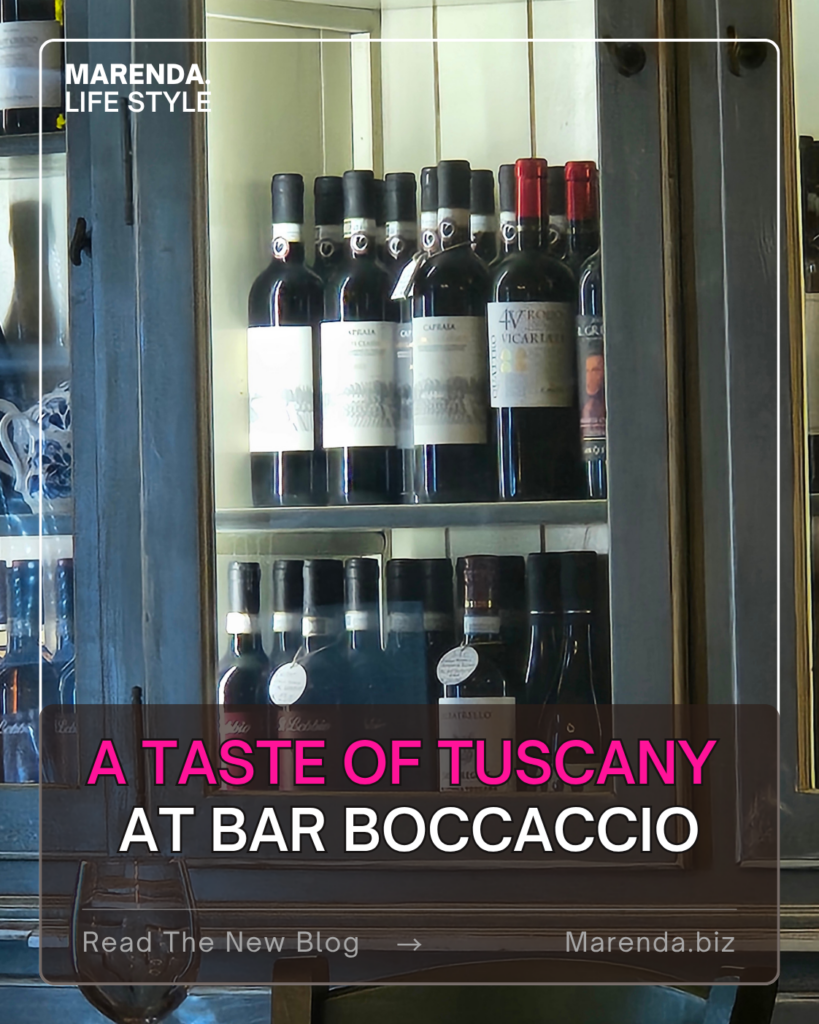
The more time I spend here, the more important that distinction becomes. At Antica Torre del Borgo, where we are staying inside Certaldo Alto, hospitality has a face. At Cucina Giuseppina, the food has a family. At A Solatìo, the wine has people and land behind it. At Ceramiche Gori, centuries-old surroundings are still being used by people creating things today. Bar Boccaccio is part of the everyday rhythm of the village. Visit Certaldo helps connect visitors to the history, businesses, and experiences that make the town what it is. Certaldo Alto is medieval, but it does not feel like somebody turned the town into a museum and handed tourists the keys.
People are still living here.
That is authenticity to me.
They are cooking local farm-to-table food here, making things with their own hands here, running multigenerational family-owned businesses here, producing wine here, serving coffee from local cafés instead of major chains, raising families here, and welcoming people like us into pieces of their everyday world.
The history surrounds all of it, but contemporary life is still happening inside that history.
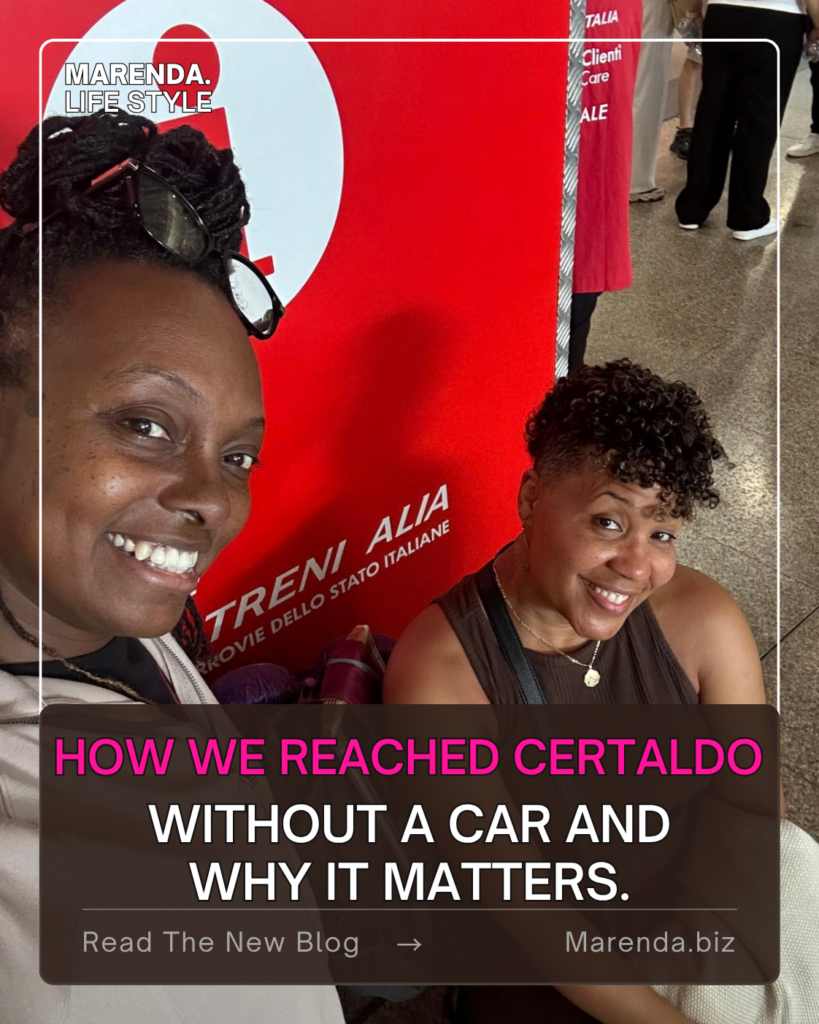
Even getting to Certaldo Alto is part of the vibe. We came by train. From lower Certaldo, the funicular carries you up toward Certaldo Alto, and there is something about that little ride that feels like a transition into another pace. Down below is the modern town and the train station that connects you back to Florence and beyond. Then you go up the hill, step out, start walking, and suddenly everything feels more intimate. You can reach so much of the historic village on foot. For travelers who have assumed that experiencing a Tuscan hill town means renting a car and driving through the countryside, Certaldo presents another possibility.
But accessibility alone would never be enough to make a place special to me.
The quiet might.
The simplicity might.
The way my mind feels here definitely might.
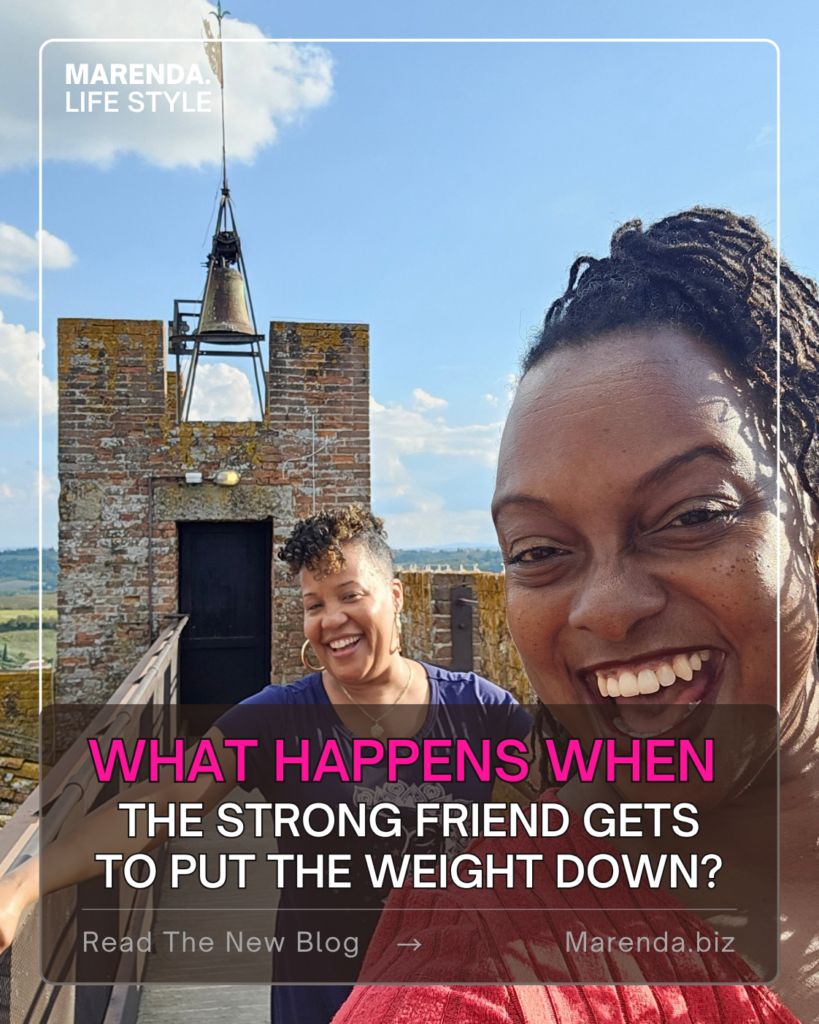
I am a storyteller, and it has not escaped me that I somehow landed in a town so closely connected to Giovanni Boccaccio. I am staying on Via Boccaccio. His history is woven into the village. Casa Boccaccio is here. His name keeps appearing as I move through the streets. I came here to report a travel story. Then I started noticing how easily my mind settles here, how clearly I can think, and how the quiet makes space for ideas instead of competing with them.
As a storyteller, I am drawn to a place where a storyteller lived.
That has to mean something to me, even if what it means is simply that Certaldo has given my mind the conditions it has been asking for. There is enough quiet to follow a thought. Enough beauty to inspire one. Enough simplicity that my attention is not constantly being pulled somewhere else. Somewhere during this visit I started seriously thinking, I could come back here and finish my book.
I have traveled enough to know how unusual that feeling is.
I have loved places that I never needed to see again. I have visited famous destinations that absolutely deserved their reputations. I have been impressed, entertained, overwhelmed, fascinated, and exhausted in cities all over the world. But very few places have made me think, I could live differently here for a little while. I could create here. I could come here with work that matters to me and give it my full attention.
Certaldo Alto has.
Maybe that is what people are really looking for when they talk about slow living and a soft life. Those ideas can easily become an aesthetic online. A beautiful dress, a wine glass, a table overlooking the countryside, an impossibly perfect sunset. There is nothing wrong with enjoying any of that, but what I am finding here feels deeper. Softness can also be the absence of unnecessary urgency. Slow living can be eating lunch without watching the clock. It can be walking somewhere because everything you need is close enough to walk. It can be spending the morning cooking with someone you have loved for more than 40 years and realizing you are completely present for it.
And that begins to answer another question I think this series needs to explore: Who is Certaldo for?
Maybe it is for the traveler who has already seen enough of the world to know that bigger does not automatically mean better. Maybe it is for the woman whose everyday life requires her to constantly think ahead and who wants a place where she can finally stay in the moment. Maybe it is for writers and creators who need their minds back. Maybe it is for longtime friends who would rather collect experiences together than race through another itinerary. Maybe it is for couples who value conversation over crowds, solo travelers who enjoy observing a place, food lovers who want to meet the people behind what they eat, and travelers who want Tuscany without feeling like they have to perform Tuscany for social media.
That may be the real Why Certaldo?
Not because Certaldo has more.
Because maybe you need less.
Less noise. Less rushing. Less performing. Less pressure to turn every hour into proof that you had an amazing vacation.
And in that space, somehow, there is more.
More conversation. More attention. More connection. More appreciation. More creativity. More of the moment you traveled all this way to experience.
I came to Certaldo planning to tell the story of an overlooked Tuscan town. Somewhere between cooking lunch with my best friend, tasting wine with a local family, walking streets where people have been telling stories for centuries, looking across those hills, and realizing how quiet my own mind had become, the story changed.
Now I am wondering whether Certaldo may be a place I return to finish one of my own.
So when somebody asks me, “Why Certaldo?”
I still think the better question is:
Why not Certaldo?
Because I have been many places.
And very few have felt quite like this.